The way you light your home can make the difference between a house that simply functions and one that truly feels like a sanctuary. Good lighting affects everything from your daily mood to how well you can perform tasks, and it even influences your home’s market value. Most homeowners underestimate the power of thoughtful light installation, treating it as an afterthought rather than a fundamental design element that shapes how spaces look and feel.
Choosing the right lighting for your home goes beyond simply installing bright bulbs in every room. It requires understanding how different types of lighting work together—much like instruments in an orchestra creating harmony. Professional electricians often see homes where poor lighting choices have left rooms feeling sterile, cramped or unwelcoming, despite having expensive furnishings and beautiful décor.
The art of home lighting involves balancing three key elements: ambient lighting for overall brightness, task lighting for specific activities and accent lighting for visual interest. Each room presents unique challenges and opportunities, from the multi-functional kitchen that needs bright work areas to the bedroom where soft, relaxing light promotes better sleep. This guide will walk you through selecting appropriate lighting for every space in your home, helping you avoid costly mistakes while creating an environment that supports both daily activities and special moments.
Key Takeaways
- Comfort, safety and productivity all hinge on good illumination: proper lighting reduces eye strain, improves concentration and helps regulate sleep patterns.
- Layering ambient, task and accent lighting creates depth and versatility. Ambient light provides general illumination, task light offers focused beams where you need them, and accent light highlights features and adds drama.
- Room purpose, size and natural light should guide fixture choice more than trends alone. Consider ceiling height, wall colours and furniture placement when planning your scheme.
- Energy efficiency and colour temperature play crucial roles in both atmosphere and running costs.
- Proper planning prevents mistakes such as over-reliance on a single fixture or mis-sized chandeliers. Incorporate dimmers and flexible controls.
- Licensed installation ensures safety and compliance with Australian standards, while professional design expertise delivers both beauty and function.
Understanding the Three Main Types of Lighting
Think of lighting design like creating a recipe where each ingredient serves a specific purpose. Just as you wouldn’t make a cake using only flour, you shouldn’t light a room using only one type of fixture. The most successful schemes combine ambient, task and accent lighting in carefully planned proportions that suit each room’s requirements.
Ambient Lighting
Ambient lighting forms the backbone of your room’s illumination, providing general brightness for safe movement and basic activities. Common sources include recessed downlights, flush-mount ceiling fittings and large pendants that cast light in all directions. Aim for even illumination—roughly 20–50 lumens per square foot—without harsh shadows or glaring hotspots.
Task Lighting
Task lighting delivers focused illumination exactly where you need it for specific activities. Examples include under-cabinet LEDs in the kitchen, adjustable desk lamps in a home office and bedside reading lights. Position fixtures to eliminate shadows and provide adequate brightness for detailed work—such as placing bathroom vanity lights either side of the mirror rather than above, reducing facial shadows.
Accent Lighting
Accent lighting adds the finishing touches that transform functional spaces into visually compelling environments. Use wall-mounted spotlights, track lighting, picture lights or LED strips to highlight artwork, architectural features or decorative pieces. By directing a brighter beam onto focal points while keeping surrounding areas dimmer, accent lighting creates contrast, depth and drama.
Choosing the Right Lighting for Specific Rooms
Every room serves different purposes, and its lighting should reflect those uses. Consider activities, natural light availability and the mood you wish to create.
Living Room
Your living room needs flexibility for everything from casual reading to entertaining guests. Begin with ambient light from a central pendant or recessed downlights. Add task lighting with table or floor lamps near seating areas. Use accent lighting—wall sconces or picture lights—to highlight artwork or alcoves. Install dimmer switches for easy adjustment between bright daytime gatherings and cosy evening relaxation.
Kitchen
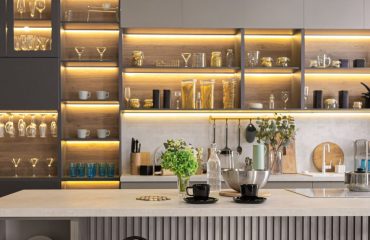
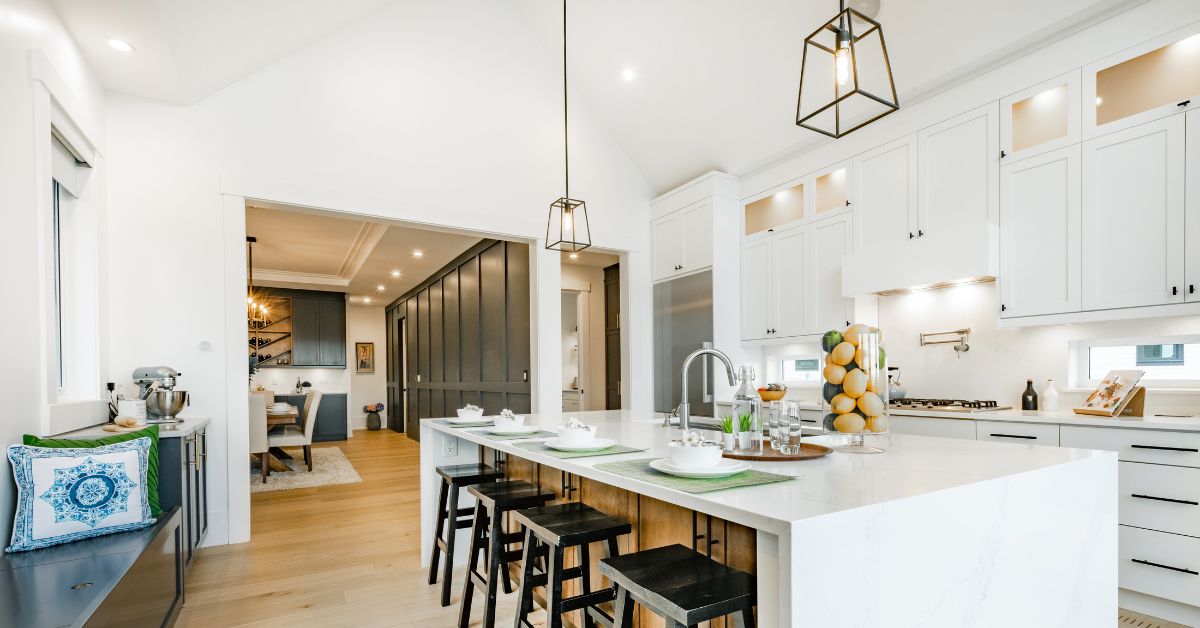
In the kitchen, safety and functionality are paramount. Install ambient downlights or a central fitting for overall visibility. Under-cabinet LEDs provide critical task lighting for food preparation, eliminating worktop shadows. Pendant lights over islands combine task light with decorative flair—choose adjustable-height fixtures to fine-tune angles. Use a cooler colour temperature (3,500–4,000 K) for prep areas, and warmer tones for adjacent dining nooks.
Bedroom
Bedrooms should feel peaceful and support rest. Ambient light can come from a modest ceiling fitting, but avoid clinical brightness. Bedside lamps or swing-arm wall lights offer gentle task lighting for reading without disturbing a partner. Select warm white bulbs (2,700–3,000 K) to promote relaxation, and consider soft accent lights—like LED strips behind headboards—to create a serene retreat.
Bathroom
Bathroom lighting must balance grooming needs with moisture safety. Use IP-rated recessed downlights for ambient illumination. Vanity lights on either side of the mirror deliver even facial lighting, essential for shaving or makeup. Complement with accent elements such as LED strips behind mirrors or under floating vanities to add a spa-like ambience. Ensure all fixtures meet local IP ratings for wet areas.
Dining Room
Dining rooms benefit from a statement fitting centred over the table—chandeliers, pendants or linear lights. Size the fixture at about half to two-thirds of the table’s width and hang it 30–36 cm above the surface. Install dimmers to tailor the mood from bright family meals to intimate dinner parties. Accent with wall lamps or buffet lights to layer the scheme and enhance sophistication.
Important Lighting Considerations
Understanding Light Bulb Specifications
- Lumens measure actual light output—focus on lumens rather than wattage when choosing LEDs.
- Colour temperature (Kelvin) sets mood: warm white (2,700–3,000 K) for relaxation; neutral white (3,500–4,000 K) for kitchens and workspaces; cool white (5,000–6,500 K) for task areas.
- CRI (Colour Rendering Index) indicates colour accuracy—look for CRI 80+ to render finishes and skin tones naturally.
Energy Efficiency and Smart Lighting
LED technology uses up to 80% less energy than incandescents and lasts 15–25 times longer. Smart systems enhance convenience and savings via app or voice control, scheduling, dimming and even colour-temperature changes to support circadian rhythms. Motion sensors ensure lights operate only when needed.
Planning Your Lighting and Avoiding Mistakes
Start with a detailed floor plan showing furniture, window positions and task zones. Avoid reliance on a single fixture—layer multiple sources at different heights. Size and position fittings to suit room proportions and activities. Early planning saves on costly relocations or rewiring later.
The Role of a Licensed Electrician
Professional installation by licensed electricians ensures safety, code compliance and reliable performance. Electricians can recommend commercial-grade fixtures, manage switchgear and integrate advanced controls. At Erose Electrical, our team combines technical expertise with design insight to deliver lighting that looks stunning and functions flawlessly for Brisbane Northside and Moreton Bay homes.
Investing in thoughtful lighting design pays dividends through enhanced comfort, energy savings and increased property value. By layering ambient, task and accent lighting—paired with proper planning and professional installation—you’ll create living spaces that delight day and night.