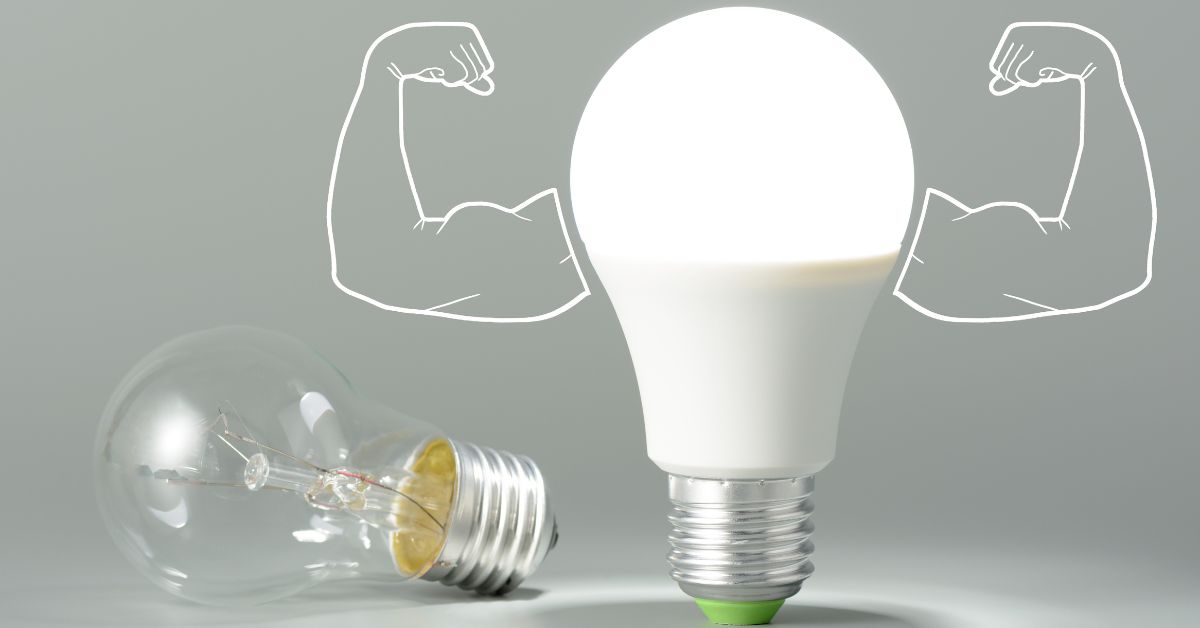
If you’ve ever wondered how long do LED lights last, the short answer is: far longer than old halogens or incandescents (when they’re selected and installed correctly). Below, we explain what “lifespan” actually means, the real-world hours you can expect at home, and the simple ways to maximise it.
For help choosing and installing LEDs on Brisbane’s northside, Erose Electrical can design, supply and fit the right solution for your space.
What “LED lifespan” really means (L70, LM-80 and TM-21)
LEDs rarely “blow” like old globes; instead, they gradually lose brightness. Industry uses the L70 metric—end of life is when a light is down to 70% of its original output. L70 values are projected from long-term LM-80 test data using the TM-21 method. The higher the L-number (L80/L90), the better the lumen maintenance. Look for products with published L and B ratings from reputable manufacturers.
So, how long do LED lights last in real homes?
Government guidance says a good-quality LED should last at least ~25,000 hours. Many integrated downlights and premium lamps quote L70 of ~50,000 hours or more. At three hours a day, 25,000 hours ≈ 22+ years; 50,000 hours ≈ 45+ years—remember, that’s to 70% brightness, not total failure. Actual results depend on the points below.
What shortens LED life (and how to avoid it)
Heat. High ambient temperatures and enclosed fittings cook electronics. Choose well-cooled luminaires and avoid cramming high-wattage lamps into sealed cans.
Drivers. Many “dead LEDs” are actually driver failures. Use quality brands and match drivers to the fitting and dimmer. Cheap no-name gear is a false economy.
Dimmers & controls. Non-LED dimmers can cause flicker, strobing and premature wear. Ask for LED-compatible dimmers and correct minimum load settings.
Power quality & surges. Voltage spikes damage electronics. Consider surge protection—especially in homes with sensitive appliances or frequent storms.
Dust & insulation contact. Dust blankets trap heat, as does insulation pushed over non-IC rated downlights. Keep clearances as per the fitting’s rating.
How to maximise LED lifespan (Brisbane home edition)
- Buy by the numbers. Favour products with published LM-80/TM-21 data and clear L70/L80/L90 ratings from recognised brands.
- Choose the right fitting, not just the globe. Integrated downlights with good heat sinks and matched drivers typically outlast retrofitted “globes in hot cans”.
- Match the dimmer. Install LED-rated dimmers, and set trim levels during commissioning.
- Mind the environment. Kitchens and alfresco areas run hotter; pick luminaires rated for the space and climate.
- Keep them clean. A quick wipe of lenses and trims reduces heat build-up and restores output.
- Plan for standards and compliance. Australia continues to phase in higher efficiency and product requirements for lamps—buying compliant gear helps ensure tested performance and support.
Signs it’s time to replace an LED
If you notice visible dimming, colour shift (whites going yellow/green), persistent flicker, or intermittent start-up, the light (or its driver) is nearing the end of useful life. Treat those symptoms as a cue to swap the unit before it becomes a safety or usability issue.
Why bring in Erose Electrical
A long-lasting LED upgrade is equal parts product selection and installation detail. Erose Electrical’s Brisbane northside team handles LED lighting installation, light placement, driver/dimmer compatibility and safe wiring—so your new lights run cooler, flicker-free and to spec. They service suburbs across Moreton Bay and North Brisbane and can advise on colour temperature, brightness and control options to suit each room.
Thinking about an LED refresh? Ask Erose Electrical to specify fittings with solid LM-80/TM-21 data, install LED-rated dimmers, and set up your home for decades of efficient, reliable light.